
Your Next Microgreens Harvest Could Be Your Best Yet: A Practical Guide
Imagine this: It’s 7:05 AM on a Tuesday, and you’re looking at a lush, 10-day-old tray of microgreens. The greens are a uniform, vibrant emerald—no yellowing, no mold, no guesswork. When you harvest, your kitchen scale shows a number 20% higher than last week. That’s the difference a few straightforward, science-informed tweaks can make. No expensive gear, no complex theories—just better results.
The advice in this post is designed to give you that result. Everything here is aimed at solving the common frustrations microgreens growers face: inconsistent yields, disease issues, weak flavors, and wasted time. If you’ve ever lost a tray to mold or felt like your greens just aren’t thriving, this is for you. We’re skipping the fluff and going straight to what works.

Germination: Start Strong, Stay Consistent
The first 48 hours set the tone for your entire crop. A weak start leads to weak harvests.
The Blackout Myth: Many growers swear by 2–3 days of total darkness. But recent experience shows a better way: a short, 24-hour blackout period immediately after seeding, followed by indirect light. Why? It encourages strong initial root development without over-stressing the seedlings. After that first day, introduce gentle light to prevent them from becoming leggy.
Seeding Density: There’s a sweet spot. Too many seeds and you risk mold from poor air circulation; too few and you waste space. Aim for about 10–12 grams of seeds per standard 10x20 inch tray. For smaller seeds like broccoli or radish, use slightly more; for larger ones like sunflower or pea, stick to the lower end. Spread them as evenly as you can—use a seed shaker or just take your time.
How this helps you: A strong, even start means more vigorous growth, which directly boosts your final yield.
Environment: Control the Variables
You can’t control the weather, but you can control your growing environment. Focus on three key factors.
Daily Airflow: Stagnant air is the enemy. It encourages mold and weakens stems. For small-scale home growers, a simple USB fan placed a few feet away, running for 15–20 minutes every hour during the day, is enough. For larger setups, a small oscillating fan on low works well. The goal is gentle air movement, not a windstorm.
Light Spectrum: While basic grow lights get the job done, optimizing your light spectrum can noticeably improve plant health and nutritional content. If you want to experiment, look for lights with a balanced spectrum: include blue light for strong, compact growth and red light to encourage leaf development. Not ready to buy a new light? Even a simple LED bulb labeled “full spectrum” can be an upgrade.
Substrate Moisture: The growing medium should be like a wrung-out sponge—damp but not dripping. Before seeding, water your substrate thoroughly, let the excess drain, and then test it. Grab a handful: it should hold together without dripping water. This prevents both drowning your seeds and creating dry spots.
Why this matters: These three factors—air, light, and water—are the foundation of plant health. Getting them right consistently is the biggest single step toward better harvests.

Watering: Find Your Rhythm
Overwatering kills more microgreens than anything else. Here’s the simple, effective routine that works for most setups.
The Bottom-Watering Advantage: Once your seeds have germinated and you lift the blackout tray, switch to bottom watering immediately. Pour water into the tray beneath your growing tray, not onto the greens. The substrate will wick up exactly what it needs. This keeps stems dry, which drastically reduces mold risk.
The “Leaf Lift” Test: How do you know when to water? It’s easy—lift a corner of the microgreens canopy. If the leaves spring back quickly, they’re fine. If they feel limp or don’t spring back at once, it’s time to bottom-water. Check twice a day, morning and evening.
The result: Healthier roots, drier foliage, and fewer losses to disease.
Harvesting: Timing Is Everything
The moment you cut your microgreens makes a huge difference in flavor, texture, and shelf life.
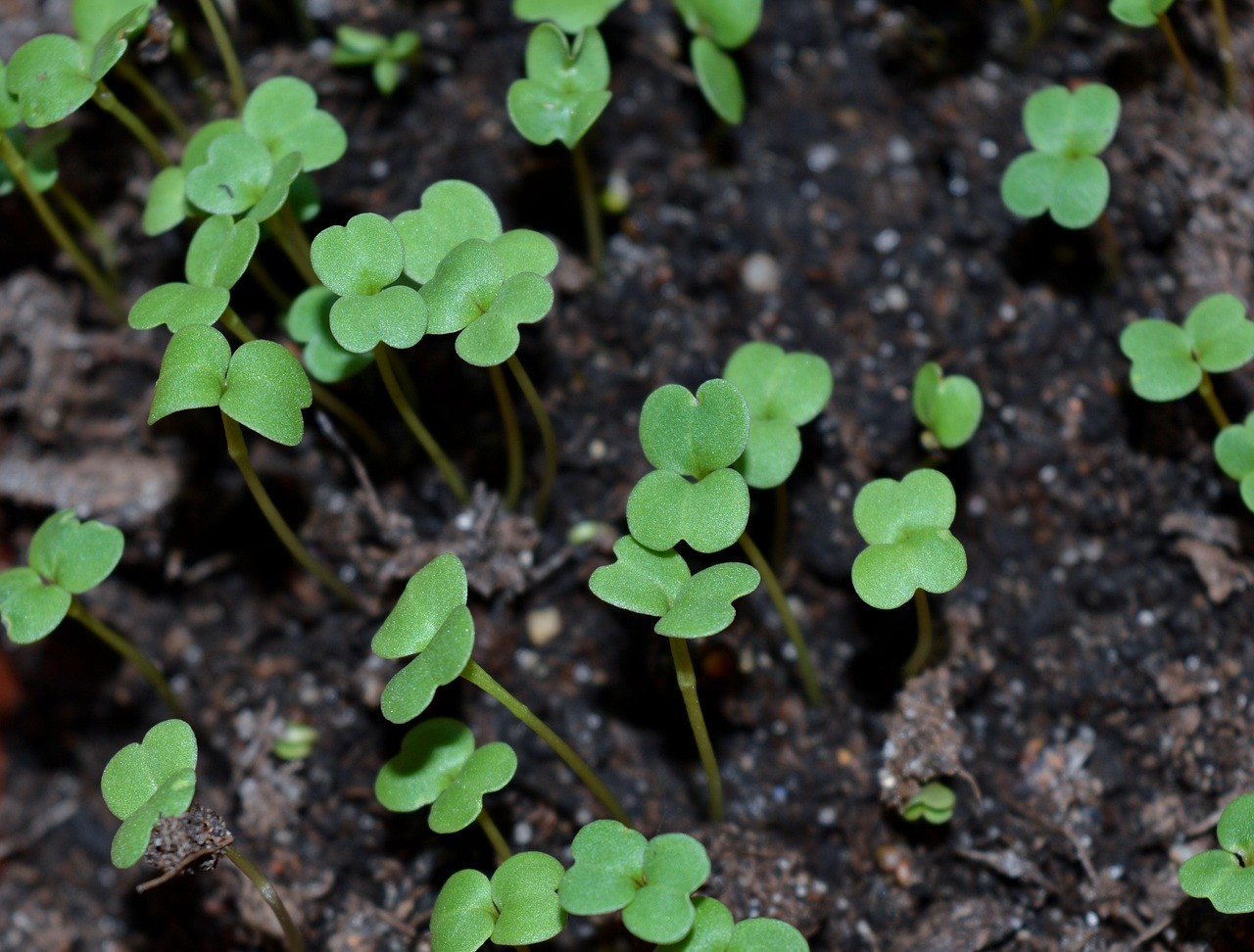
The True Leaf Signal: Most guides say to harvest in 7–14 days, but the true signal is the appearance of the first set of “true leaves.” These look different from the initial seed leaves—they’re usually more defined and characteristic of the mature plant. Harvesting just after the first true leaves appear (typically around days 8–10 for many varieties) gives you the best balance of size, tenderness, and nutritional density.
Cut Smart: Use clean, sharp scissors. Cut just above the substrate surface. Gently gather the greens with one hand and cut with the other. If you’re not using them immediately, store them in a sealed container in the fridge with a single paper towel to absorb excess moisture. They’ll stay fresh for up to a week.
This simple timing tip boosts both your eating enjoyment and your harvest’s effective yield by ensuring peak quality.
Disease Prevention: Keep Your Trays Healthy
Mold and damping-off don’t have to be part of the process.
Hygiene: Reusable trays are great, but they need proper cleaning. After each harvest, wash trays, lids, and any tools with a diluted hydrogen peroxide solution (1 part 3% hydrogen peroxide to 4 parts water), rinse well, and dry completely. It takes five minutes and prevents countless problems.
The Cinnamon Trick: An easy, natural fungicide: lightly sprinkle food-grade cinnamon over your seeds right after sowing, before the blackout period. Cinnamon has antimicrobial properties and helps suppress mold without harsh chemicals. Don’t overdo it—a light dusting is enough.
Note: Always consult product labels and guidelines. This isn’t medical advice, just a practical gardening tip.
These steps are your frontline defense against crop loss.
Experiment—You’re in Control
Here’s the thing: the best way forward is to try these tips and see what works for your specific environment, water, and seeds. Start a simple grow journal—note seeding date, harvest date, weight, and any issues. When something works well, do it again; when it doesn’t, adjust.
These aren’t rigid rules—they’re proven starting points. Your goal is to build a reliable, repeatable system that delivers the results you want, harvest after harvest.
Ready for Your Best Harvest Yet?
You don’t need to overhaul everything at once. Pick one or two of these techniques—maybe it’s perfecting your seeding density, or switching to bottom watering. Apply them to your next tray. Focus on the method, observe the results, and adjust as you go.
Consistent, healthy, high-yielding microgreens aren’t about luck—they’re about method. Start with a strong germination, control your environment, water with precision, harvest at the right moment, and keep things clean. Small steps, taken deliberately, lead to big improvements.
Your next tray is your chance to put these ideas into practice. Make it count.




0 Comments